


Nature Notes
Why do rattlesnakes rattle and hummingbirds hum?
How do flowers market themselves to pollinators?
Why do tarantulas cross the road?
Nature Notes investigates questions like these about the natural world of the Chihuahuan Desert region and the Llano Estacado every week. Through interviews with scientists and field recordings, this Marfa Public Radio original series reveals the secrets of desert life.
Join host Dallas Baxter on Tuesdays and Thursdays at 7:45 am during Morning Edition and 4:45 pm during All Things Considered. New episodes premier on Thursdays and replay on Tuesdays. Episodes are written and produced by Andrew Stuart and edited by Marfa Public Radio and the Sibley Nature Center in Midland, Texas.
-
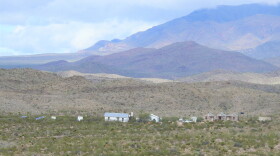 The Trump administration’s planned 30-foot-high border wall, stretching more than 160 miles from Hudspeth County to the western boundary of Big Bend Ranch State Park, will impact a landscape as wild as any in Texas, with profound impacts for both desert wildlife and desert science.
 -
 How will the Trump administration’s new border-infrastructure projects impact these bears? Scientists at Alpine’s Borderlands Research Institute, or BRI, are seeking answers to this timely question.
 -
 In the coming months, the Trump administration’s construction of border barriers could impact hundreds, even thousands, of archeological sites in the Lower Pecos Canyonlands, where the Pecos River and Devils River join the Rio Grande
 -
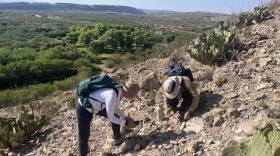 The Trump administration’s plans for an unprecedented expansion of border-policing infrastructure in Big Bend have also triggered an ambitious scientific initiative. The Big Bend Borderlands BioBlitz aims to document the biodiversity here before it’s damaged or destroyed.
 -
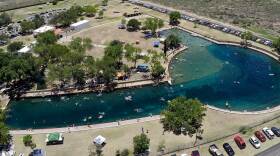 Alpine geologist Jesse Kelsch is seeking insight into the groundwater that sustains the San Solomon Springs as part of her broader research into the region’s aquifers.
 -
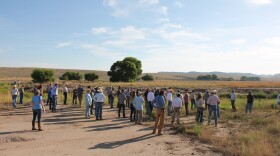 August 5th to 7th, the Trans-Pecos Wildlife Conference will bring together landowners and scientists – to explore practical solutions for sustaining our region’s wild creatures.
 -
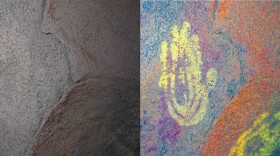 Hueco Tanks, east of El Paso, will always inspire wonder. Its red volcanic mountains create a desert oasis. And the prehistoric imagery painted on its cliffs and cave walls is deeply evocative.
 -
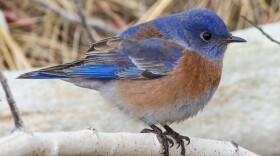 Far West Texas is home to several species of azure-hued avians. Some of these bird species are full-time residents, while others are summering now in our region.
 -
 Each spring, hepatic tanagers journey from as far away as Central America to the Chisos, Davis and Guadalupe mountains, to breed in the Ponderosa pine forests of these West Texas sky-island ranges.
 -
 Scaled quail – also known as blue quail and “cottontops” – are quintessential creatures of the arid grasslands and the dominant quail species in West Texas. Researchers at Alpine’s Borderlands Research Institute are learing how adaptable these seemingly vulnerable creatures are.


